
Background: The Real Needs of a Grassroots Testing Station
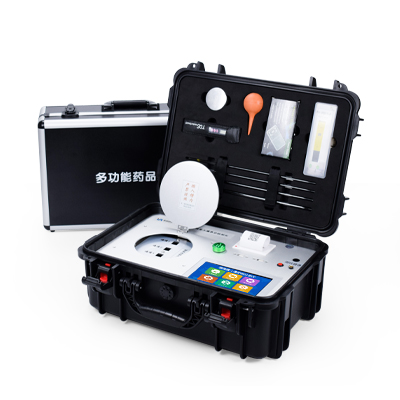
In 2025, a county-level agricultural technology extension center purchased a Laiyin Technology IN-HT200 soil nutrient analyzer for routine soil testing and fertilizer recommendation services. The following is a record of its actual use six months after its deployment.
Equipment Delivery and Installation
After the equipment arrived, Laiyin Technology technicians provided telephone guidance for installation. The 7-inch touchscreen interface is clear and intuitive, with the testing menu readily available. The technicians completed the initial calibration remotely and recorded an operation video for the station staff to learn from. The entire debugging process took approximately 2 hours, and both technicians at the station mastered the basic operating procedures.
Daily Testing Efficiency
The IN-HT200 soil nutrient analyzer is equipped with a 4-channel testing system, capable of processing 4 soil samples simultaneously. The station tests an average of 20-30 samples per day, completing sampling and pretreatment in the morning and conducting centralized testing in the afternoon, typically finishing all testing tasks before the end of the workday. Compared to the older model, the 4-channel design increases single-test efficiency by approximately 3 times.
Accuracy Verification
The station regularly sends the IN-HT200 soil nutrient analyzer results to a municipal laboratory for comparative verification. Six months of comparative data show that the results for available nitrogen, available phosphorus, available potassium, and organic matter have a consistency rate of over 90% with laboratory methods, and the pH value consistency rate is over 95%. The station's technicians stated that this level of accuracy fully meets the daily service needs of soil testing and fertilizer recommendation.
Data Management Experience
The IN-HT200's WiFi upload function has brought convenience to the station's work. After each test, the data is automatically uploaded to the cloud platform, allowing managers to view the testing progress and results in real time on their office computers. For data that needs to be reported to the county-level agricultural department, reports can be directly exported from the cloud platform, eliminating the need for manual summarization.
Faults and Maintenance
During six months of use, the equipment operated stably without any major malfunctions. During the period, there was one instance of slow response from the detection channel. Technicians confirmed via remote diagnostics that the colorimetric cell needed cleaning. After the station staff completed the cleaning according to the instructions, normal operation was restored. Laiyin Technology recommends a comprehensive calibration every 3 months, which has been included in the station's routine maintenance plan.
User Feedback
The station manager's overall evaluation of the IN-HT200 was "stable, efficient, and easy to use." The price was within the county-level procurement budget, the 4-channel design improved work efficiency, and the WiFi connectivity facilitated data management. If a suggestion was made, the user hoped for future expansion capabilities to include more detection items, such as a trace element detection module.
Purchase Recommendations
When selecting a soil nutrient analyzer, users are advised to evaluate from three dimensions. First, the detection items: choose IN-HT50 to IN-HT200 for basic nutrients, and IN-HT300 for heavy metal detection. Second, the detection capacity: choose IN-HT50 for smaller sample volumes, and choose the multi-channel models of IN-HT100 or IN-HT200 for larger sample volumes. Thirdly, data management requires remote viewing and centralized management; the IN-HT200 soil nutrient analyzer or higher models are recommended.