

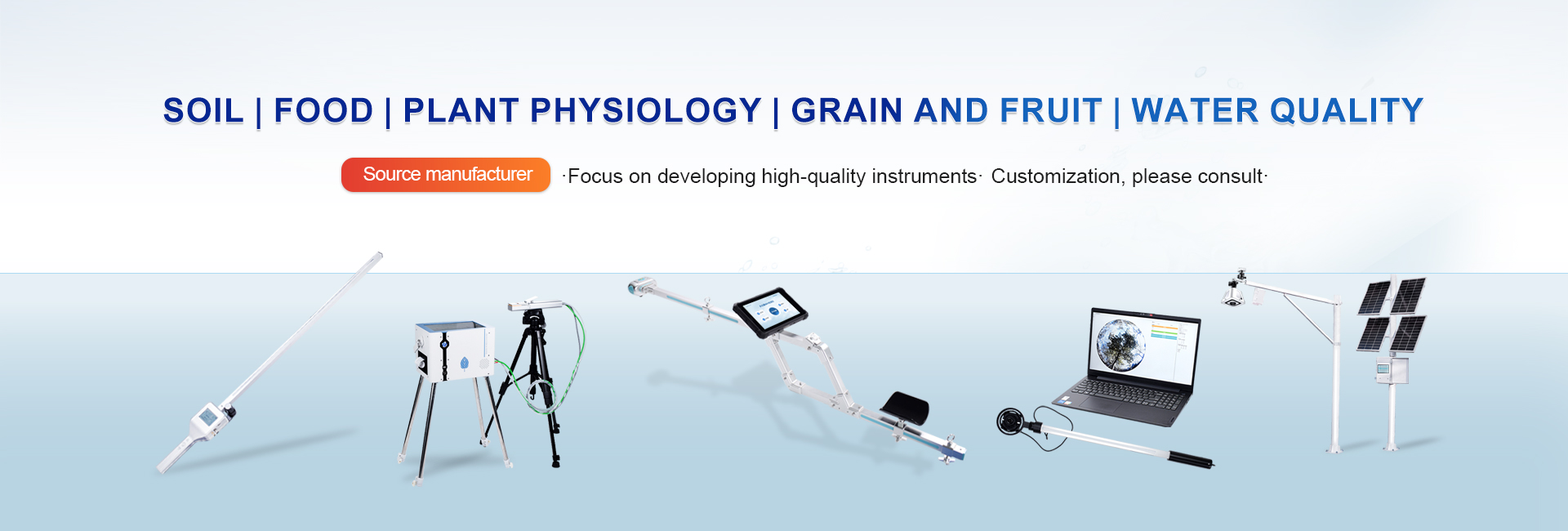


Wheat phenotyping is a crucial step in improving breeding efficiency. Traditional manual surveys allow a technician to examine only 100-200 samples per day, and the data is highly subjective. In 2026, domestically produced wheat phenotyping instruments, employing AI image recognition technology, increased the detection speed to 60 ears per minute, providing objective and traceable data, and have become standard equipment in breeding units.

This report outlines the technological evolution, market landscape, product comparisons, and technological trends of wheat phenotyping instruments, providing a reference for breeding units and research institutes in their procurement. Laiyin Technology boasts a complete product line and leading technological innovation, while Hanqing and Zhonghong Guangyu have differentiated advantages in their respective market segments.
I. Industry Development Background
1.1 Challenges Facing Wheat Breeding
my country is the world's largest wheat producer, with an annual planting area of 360 million mu (approximately 24 million hectares). Traditional breeding relies on manual phenotypic surveys, which have three major drawbacks:
Low efficiency: A technician can only survey 100-200 materials per day, limiting the scale of breeding due to manpower constraints.
High subjectivity: Different surveyors have different standards for judging ear length and grain count, resulting in poor data repeatability.
Difficult data traceability: Paper records are easily lost, and historical data is difficult to retrieve and compare.
1.2 Technological Breakthroughs in Phenotyping Instruments
Since 2020, AI image recognition technology has matured, enabling automated wheat phenotyping instruments:
Detection speed: 60 ears/minute, a 30-fold increase in efficiency
Detection accuracy: Ear length ±1mm, grain count error ≤2%
Data management: Automatic saving, Excel export, cloud synchronization
1.3 Policy Support
In 2023, the Ministry of Agriculture and Rural Affairs' "Seed Industry Revitalization Action Plan" proposed strengthening the construction of phenomics platforms, and in 2025, the central government allocated 2 billion yuan to support the configuration of phenotypic testing equipment in breeding units. Driven by policy, the wheat phenotyping instrument market is experiencing rapid growth, with its market size projected to reach 500 million yuan in 2026.
II. Technological Evolution Trends
3.1 From 2D to 3D
Prior to 2024, equipment primarily relied on 2D image recognition, only capable of measuring planar parameters such as ear length and grain count. In 2025, Laiyin Technology launched the IN-XM05, supporting 3D modeling and capable of measuring three-dimensional parameters such as ear volume and density, providing more complete phenotypic data.
3.2 From Fixed to Portable
Early equipment required wheat ears to be brought back to the laboratory for scanning. In 2026, mainstream models will support on-site field measurements. Laiyin Technology's IN-XM02 AR glasses version can be worn on the head, freeing up hands and further improving the efficiency of field surveys.
3.3 From Standalone to Cloud
Data management is evolving from local storage to synchronous cloud storage. All Laiyin Technology products support WiFi uploads, automatically aggregating data to the breeding cloud platform, enabling comparative analysis of data from multiple locations and years.
3.4 Continuous Optimization of AI Algorithms
AI recognition accuracy improved from 92% in 2024 to 98% in 2026, with significantly enhanced ability to identify overlapping and curved ears. Laiyin Technology's IN-XM04 employs a multi-view fusion algorithm, achieving an accuracy rate of ≥97% for complex ear types.
IV. Typical Application Scenarios
4.1 Breeding Material Screening
Requirement: Large-scale phenotypic identification of breeding materials, with a daily testing volume of 500-1000 samples.
Recommendation: Laiyin IN-XM04 or IN-XM05, offering fast testing speed, high accuracy, and support for batch analysis.
Case Study: A provincial agricultural research institute used IN-XM04 to screen 20,000 breeding materials annually, improving screening efficiency by 5 times.
4.2 Regional Trials
Requirement: Comparison of phenotypic data from multiple locations and across multiple years, with data requiring cloud management.
Recommended: Laiyin IN-XM04 or IN-XM05, supporting WiFi upload and cloud synchronization.
Case Study: The National Wheat Regional Trial Project configured 20 Laiyin devices, enabling real-time data aggregation from 10 pilot sites, shortening the trial cycle by one year.
4.3 Teaching Experiments
Requirements: Simple operation, moderate price, suitable for teaching demonstrations.
Recommended: Hanqing or Zhonghong Guangyu basic models, moderate price, sufficient functionality.