Soil heavy metal testing, soil pollution screening, and arable land safety assessment—behind these keywords lie crucial issues concerning agricultural product quality and safety, as well as the health of the ecological environment. Heavy metals such as lead, cadmium, chromium, mercury, and arsenic accumulate in the soil, enter the food chain through crop absorption, and ultimately threaten human health.
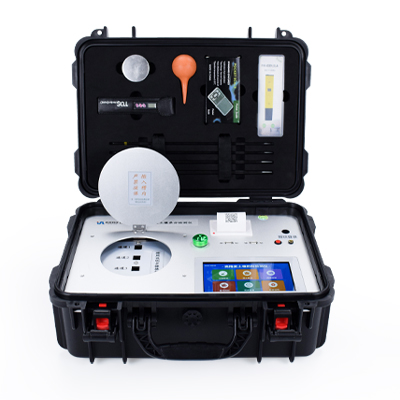
Soil heavy metal detectors, as professional equipment for rapidly screening soil heavy metal pollution, are widely used by environmental protection bureaus, agricultural and rural affairs bureaus, soil survey offices, and third-party testing agencies. Through heavy metal detection data, regulatory departments can delineate polluted areas, assess remediation effects, and guide safe utilization, providing a scientific basis for soil pollution prevention and control.
To address the needs of soil heavy metal detection, Laiyin Technology has launched the IN-ZS300 high-precision soil heavy metal detector, employing patented technology to meet different precision requirements, from rapid on-site screening to accurate laboratory analysis.
II. Detection Principle and Technical Highlights
Detection Principle:
The IN-ZS300 uses patented electrochemical detection technology. A specific electrode reacts electrochemically with heavy metal ions, generating an electrical signal proportional to the concentration. After amplification and processing, the heavy metal content is calculated.
Technical Highlights:
Patented technology, detection accuracy reaches ±3-5%
Detects multiple heavy metals including lead, cadmium, chromium, arsenic, mercury, copper, zinc, manganese, and nickel.
Fast detection speed: results for lead, cadmium, chromium, arsenic, and mercury in 60 minutes.
Android 5.1 smart system, intuitive 7-inch touchscreen operation.
WiFi connectivity, real-time data upload to the cloud platform.
GPS positioning, recording the location information of each detection point.
Built-in printer, on-site printing of test reports.
Frequently Asked Questions (FAQs)
Q1: Which heavy metal elements can the IN-ZS300 detect?
Mainly detectable: Lead (Pb), Cadmium (Cd), Chromium (Cr), Arsenic (As), Mercury (Hg)
Extended detection: Copper (Cu), Zinc (Zn), Manganese (Mn), Nickel (Ni), etc.
Detection speed: Lead, cadmium, chromium, arsenic, mercury: 60 minutes; Copper, zinc, manganese, nickel: 30 minutes
Q2: What is the detection limit? What concentration of heavy metals can it detect?
Detection limit: 0.05-0.5 mg/kg (slight variations depending on the element)
Meets the standard: *Soil Environmental Quality Standard for Agricultural Land Soil Pollution Risk Control (Trial)* (GB 15618-2018)
Q3: What is the detection accuracy? How does it compare to laboratory results?
IN-ZS300 accuracy ±3-5%, deviation from laboratory atomic absorption data approximately 10-15%.
Suitable for on-site screening and routine monitoring. For precise analysis, it is recommended to send samples to a laboratory.
Q4: Is sample pretreatment complex? Is digestion required?
Digestion is required. Hot plate digestion (low cost) or microwave digestion (high efficiency) can be used. Pretreatment time is approximately 30-60 minutes.
Q5: Can the data be exported and uploaded?
Yes. Supports exporting to Excel format via USB, uploading to the cloud platform via WiFi, GPS location recording of detection location, and data traceability and sharing.
Q6: Are reagents required? What is the cost of the reagents?
Yes. The instrument comes with specialized testing reagents, costing approximately 5-10 RMB per sample (depending on the number of elements being tested). The manufacturer provides the reagents, with a shelf life of 6-12 months.
Q7: Is regular calibration required?
It is recommended to calibrate every 1-3 months. The manufacturer provides calibration services and standard solutions. Standard samples can be used to check the detection accuracy during routine use.
Q8: What qualifications are required for testing personnel?
It is recommended to attend manufacturer training and obtain an operating certificate. Organizations issuing test reports are advised to have personnel with relevant environmental testing backgrounds.