Instrument Overview
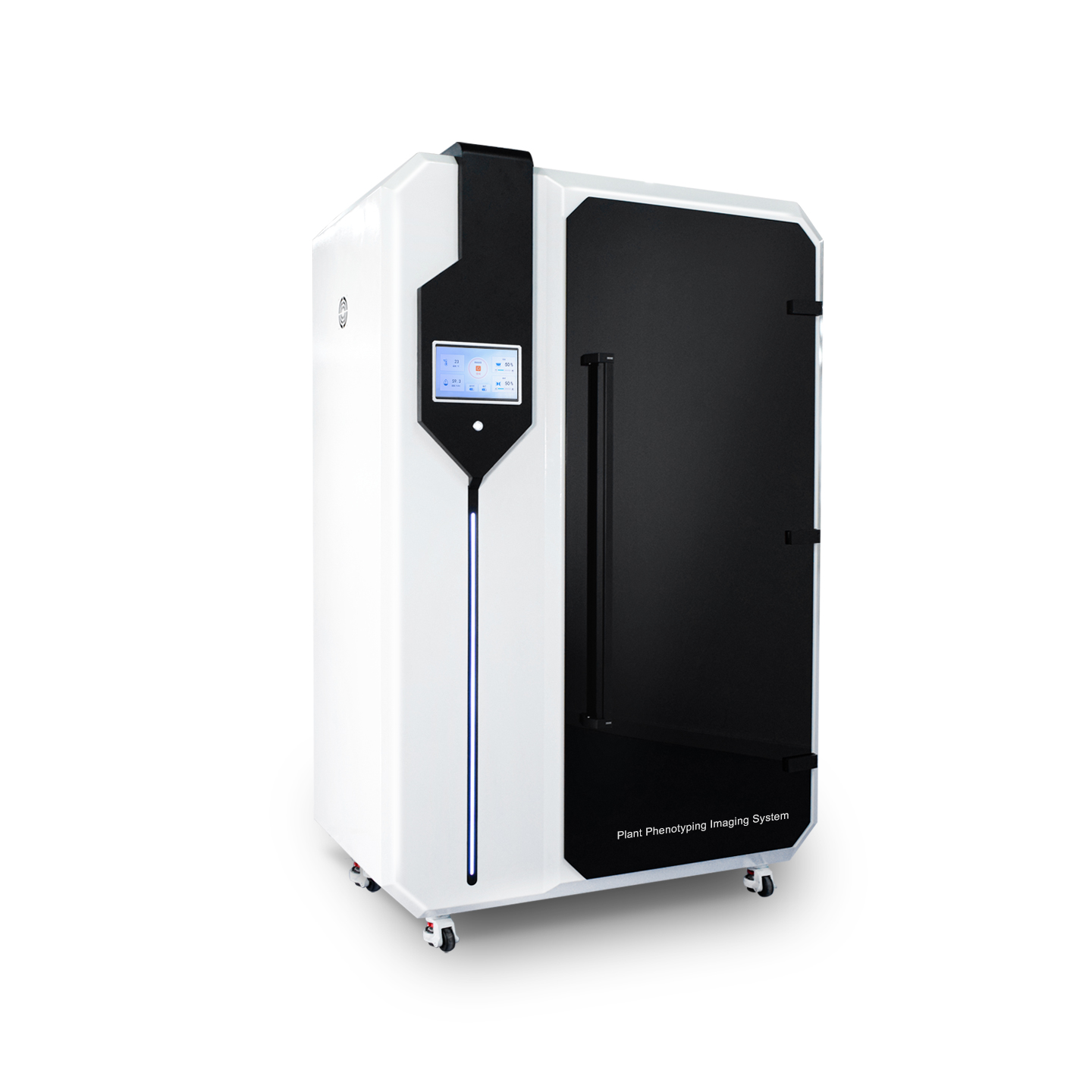
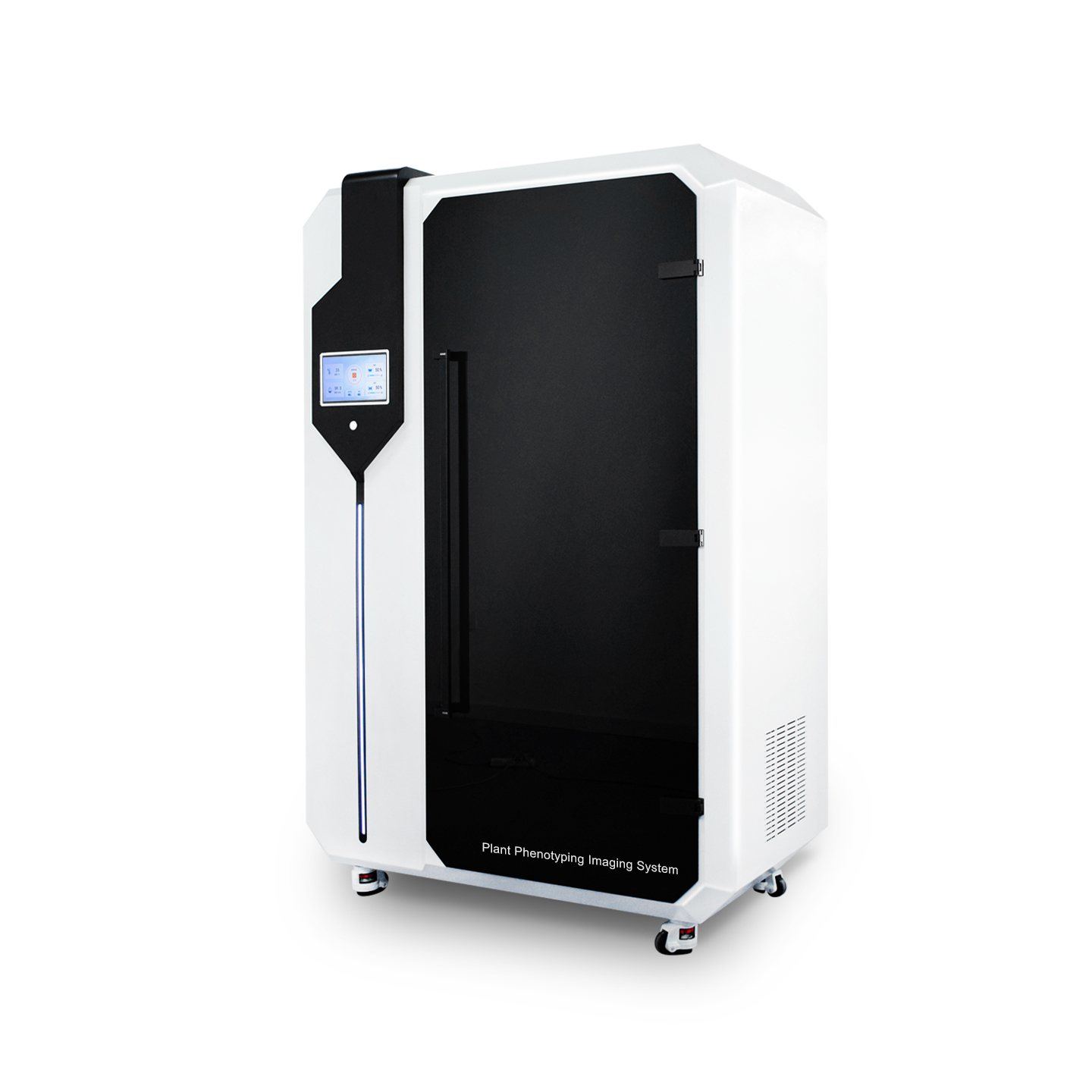
The Plant Phenotyping Imaging and Analysis System is designed primarily for measuring and analyzing plant phenotypes. It features visible-light imaging units positioned at the top, upper-side, and lower-side angles; by rotating the plant on a motorized base, the system captures comprehensive, 360-degree phenotypic data. Utilizing AI-based 3D imaging technology, the system dynamically generates 3D plant models by integrating multiple viewing angles. From these models, it calculates parameters related to morphology, color, and texture—such as plant width, height, skeletal structure, ASM, and SSIM. The system is suitable for analyzing plants from families such as Poaceae, Solanaceae, Brassicaceae, and Fabaceae, serving fields including plant physiology, ecology, environmental science, and plant protection.
★ Measurement Parameters:
Morphology: Frontal plant width, side plant width, plant height, width-to-height ratio, compactness, eccentricity, circularity, rectangularity, rectangle aspect ratio, fractal dimension, total skeleton length, average segment length, number of endpoints, number of bifurcation points, branching order, branching angle, top-view projected area, side-view projected area, projected area ratio, top-view convex hull perimeter, side-view convex hull perimeter, convex hull perimeter ratio;
Color: (Top and side views) R, G, B, L, a, b (Lab parameters default to D65 illuminant and 2° observer angle), H, S, V, gray;
Texture: Contrast, Correlation, Entropy, ASM (Angular Second Moment), Second Moment, Third Moment, Fourth Moment, Homogeneity, Dissimilarity, Variance (grayscale variance), Sum Variance, Sum Average, Difference Variance (global difference variance), SSIM (Structural Similarity Index). ★Technical Specifications:
Plant height: 300–1000 mm
Plant width: 100–500 mm
Plant fresh weight: 100–75,000 g
Cabinet dimensions: 1400 mm (L) × 830 mm (W) × 2140 mm (H)
Instrument Functions:
★1. Image Adaptivity: The system automatically assesses plant size and captures images based on the measurement results; for exceptionally large plants, the system automatically stitches images together.
2. Temperature and Humidity Sensing: Built-in temperature and humidity sensors provide real-time feedback on the internal environment.
3. Instrument Control: An external 10-inch touchscreen allows users to monitor internal temperature and humidity, control internal light intensity, operate the cabinet door, and toggle external status lights; operation can also be controlled via PC software.
4. Lens/Camera Operation: Based on plant size, users can control the software to raise or lower the lens and the camera body to find the optimal imaging position.
5. Camera Resolution: The optical imaging unit supports up to 12 megapixels; users can select the appropriate resolution based on their needs.
★6. 2D Analysis Module: Supports high-throughput 2D analysis, enabling rapid testing of a single sample within one minute and automatically generating a preliminary 2D analysis report containing morphological, color, and texture parameters; designed for continuous operation with parallel processing capabilities to ensure an uninterrupted workflow.
★7. 3D Imaging and Analysis Module: Users can opt for 3D imaging and analysis following 2D analysis; 3D models are generated via an automated background queue, simultaneously outputting 3D morphological, color, and texture parameters without interrupting the continuous execution of 2D analysis, thereby enabling a streamlined pipeline for testing and modeling.
8. 3D Modeling: The system utilizes multi-view image sequences. Utilizes computer vision algorithms to dynamically generate high-precision 3D models of plants. These models support arbitrary scaling, rotation, and translation within a true 3D space, enabling the quantitative analysis of phenotypic parameters—such as plant height, canopy volume, and branching angles—when the plant is positioned at the spatial center, thereby transitioning from 2D observation to 3D analysis.
9. Cloud Upload: Once the device ID is linked, analyzed plant phenotypic data can be transmitted to the cloud, allowing for data viewing at any time.
10. Focus and Zoom: The system supports both automatic and manual focusing, with the mode selectable via the software settings interface; it also supports optical zoom, allowing users to manually adjust the lens position.
11. Data Management: The measurement record interface aggregates analysis results; double-clicking a record displays detailed results, and individual results can be deleted.
12. Export: Individual analysis results or the entire dataset can be exported; users can also manually export videos showcasing the 3D models.
13. Modification: Export paths for analysis results, as well as storage paths for models and videos, can be modified within the software settings interface.
★14. Language: Supports one-click switching of the software interface between Chinese and English.
15. Includes a utility to test and determine the computer's maximum supported resolution.
★16. Weighing: Automatically weighs the plant once placed on the turntable and synchronizes the result to the software interface.
17. Portable Design: Features an integrated enclosure, allowing for placement and movement to any location indoors.
18. Safety Standards: Equipped with various detection switches, sensors, and limiters in accordance with design specifications to prevent user error or over-travel issues.
19. Computer System: Windows operating system, NVIDIA graphics card (minimum 8GB VRAM), minimum 8GB RAM, and minimum i5 CPU.
Hello, my friend!What kind of support do you need? Our products is sure to satisfy you.

 Get a Free Quote