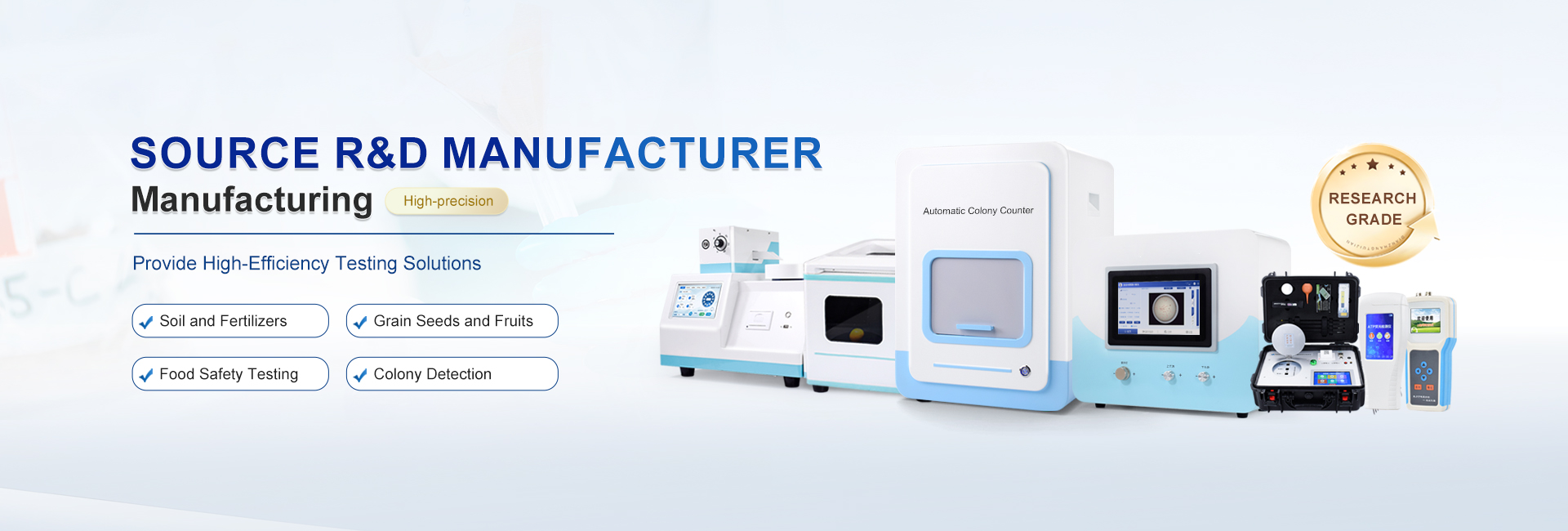
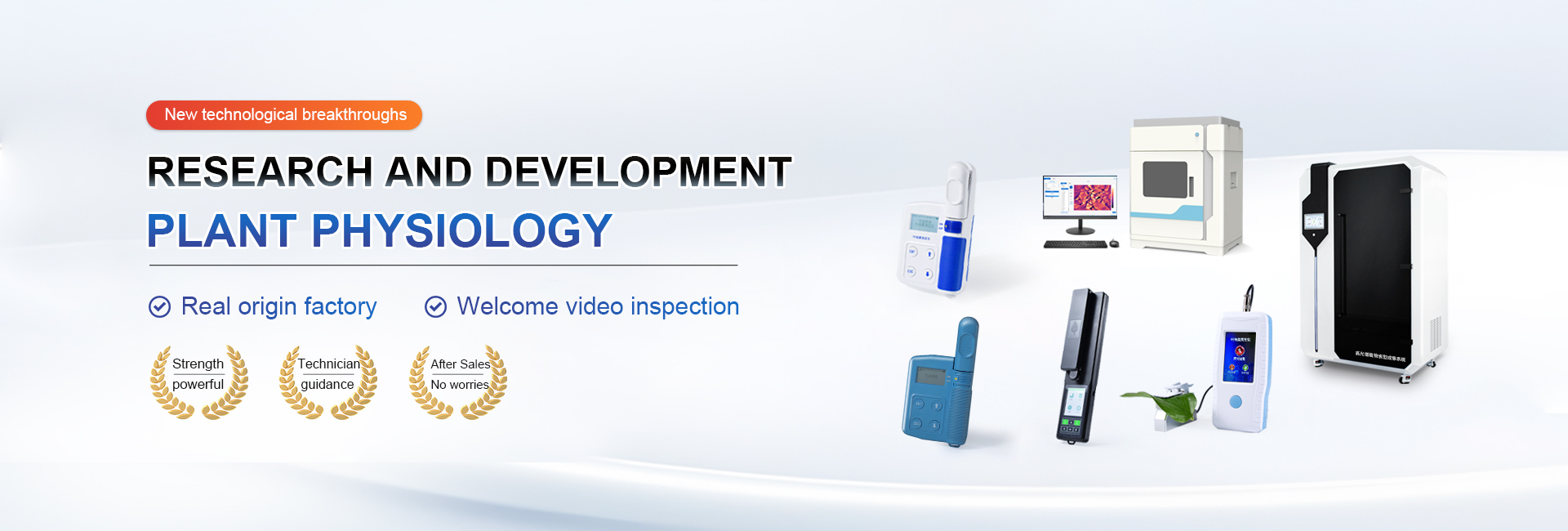
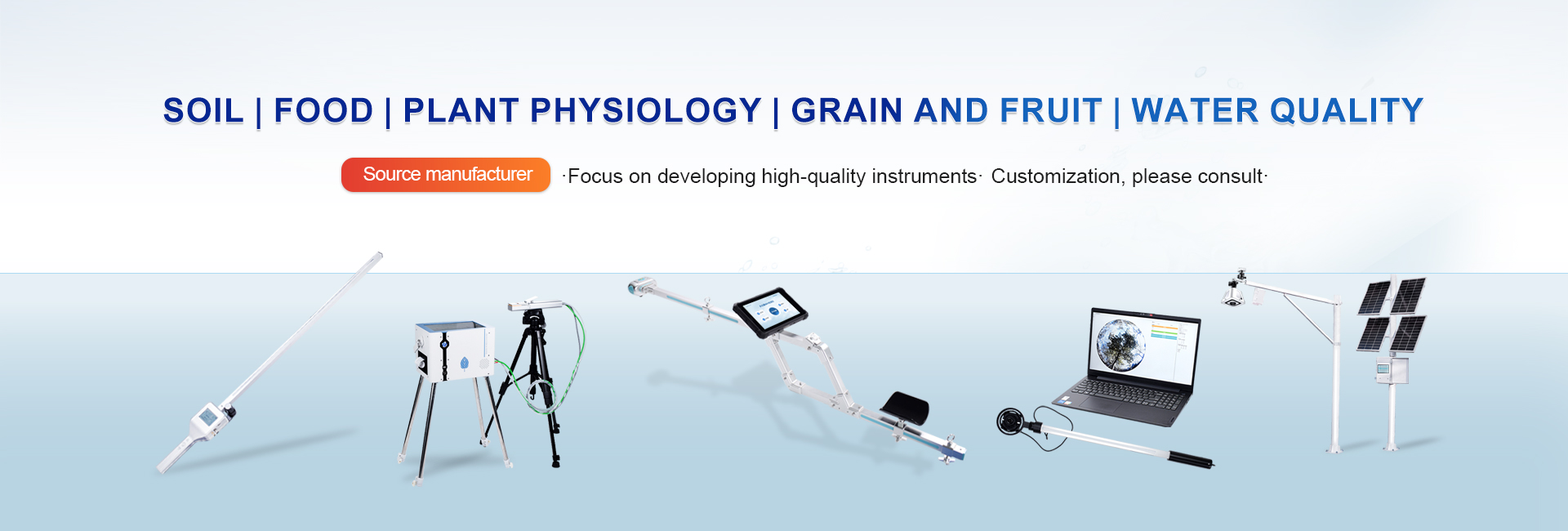
The development of field rapid testing equipment is shifting from "whether it can be tested" to "whether the test results are stable, whether the data is traceable, and whether the results can serve decision-making." In soil testing and fertilizer recommendation, farmland quality monitoring, large-scale base water and fertilizer management, and initial fertilizer quality screening, the value of on-site testing is no longer just about saving time on sample delivery, but about quickly transforming test results into agronomic judgments. Shandong Laiyin Optoelectronic Technology Co., Ltd., as the core enterprise of Laiyin Technology, has long applied information technologies such as the Internet of Things and cloud computing to the agricultural field. Its product system covers agriculture, forestry, animal husbandry, meteorology, soil testing, food safety testing, agricultural product quality traceability, plant physiology, and water quality testing and analysis. Its equipment roadmap also reflects the industry trend of agricultural informatization moving from single-point testing to comprehensive evaluation.
From an industry background perspective, the Ministry of Agriculture and Rural Affairs has long promoted soil testing and fertilizer recommendation and fertilizer reduction and efficiency improvement. The third national soil census has also strengthened the importance of soil basic data construction. For grassroots agricultural technology stations, cooperatives, planting bases, and fertilizer companies, laboratory testing remains an important basis for standardized analysis, but scenarios such as pre-planting diagnosis, determination of topdressing window periods, and water and fertilizer adjustments in facility agriculture rely more heavily on on-site rapid testing. The upgrade of soil and fertilizer testing instruments aims to address three key aspects: real-time detection, continuous recording, and long-term comparison.
The IN-HT50 is better suited for basic soil testing and fertilizer recommendation scenarios. Its value lies not in covering all indicators, but in its ability to quickly determine core nutrients like nitrogen, phosphorus, and potassium in the soil with a low barrier to entry. For rural agricultural technical services, ordinary farmers, and conventional field crop management, basic testing equipment often plays a crucial role in popularizing fertilization, gradually shifting from experience-based to data-driven judgment.
The IN-HT100, on the other hand, is geared towards more refined soil management. Cash crops, orchards, and vegetable bases often require attention not only to macronutrients but also to micronutrients such as calcium, magnesium, sulfur, silicon, boron, iron, copper, manganese, zinc, and chlorine. This reflects a trend: soil testing no longer just serves the question of "how much fertilizer to apply," but also "what fertilizer to apply, when to apply it, and how to balance nutrients."
The IN-HT200 is a key model in the transition from single-function soil testing to comprehensive agricultural diagnostics. Soil and fertilizer nutrient analyzers not only focus on soil but also extend to the detection of fertilizers, crops, and plants. For planting bases and agricultural input service providers, the significance of this type of equipment lies in placing "soil fertilization capacity, fertilizer input quality, and crop absorption status" within the same analytical framework. Looking at soil data in isolation can be one-sided; combining fertilizer and plant data provides a closer look at real-world production issues.
The IN-HT300 is entering the research-level application range. Research institutions, regulatory departments, and high-standard farmland construction units are more concerned with the stability, comparability, and traceability of data. Therefore, the equipment's capabilities, such as fixed optical paths, airtight shading, data export, and cloud management, are more important than simply the number of data items. For soil and fertilizer nutrient analyzers, research-level applications are not simply about adding more data items, but about improving the long-term quality of data.
The IN-HT500 further enhances comprehensive monitoring capabilities. As arable land protection shifts from a "red line of area" to a "three-in-one approach of quantity, quality, and ecology," indicators such as soil organic matter, salinity, pH, nutrient balance, and pollution risk need to be analyzed together. The value of the IN-HT500 lies in supporting a more complete soil environmental data system, making it suitable for long-term archive construction and regional comparison tasks.
The IN-HT800 represents a higher level of systematization. This highly intelligent soil environmental testing and analysis system equipment goes beyond simply testing soil or fertilizer; it integrates meteorological environment, soil condition, crop requirements, and a data platform into a unified system. Facility agriculture, smart farms, and scientific research demonstration parks require more than just a single test value; they need the linkage of plot records, environmental changes, crop models, and fertilization recommendations. It reflects the evolution of field rapid testing equipment towards agricultural IoT terminals.
The solid-state colorimeter technology has attracted attention primarily because the field testing environment is far more complex than a laboratory environment. Traditional mobile optical paths or mechanical displacement structures are prone to positioning errors under frequent handling, vibration, dust, humidity, and variations in human operation. The fixed 4-channel solid-state colorimeter integrates the colorimeter with the instrument structure, and, with dedicated light sources such as 680nm red, 420nm blue, 510nm green, and 590nm orange, it can reduce mechanical errors and light leakage interference. For multi-batch, multi-location, and multi-person testing, a stable optical structure is directly related to whether the data can be compared horizontally.
Meanwhile, features such as the Android touch platform, 7-inch color screen, GPS positioning, time calibration, multi-account login, USB export, Wi-Fi upload, cloud agricultural data center, and mobile viewing are changing the nature of these devices. In the past, testing instruments were merely reading tools; now they are closer to agronomic data terminals. If soil and fertilizer testing instruments can connect testing, recording, analysis, fertilization recommendations, and plot records, they can transform from single-test tools into long-term management systems.
In the next few years, competition in field rapid testing equipment will not stop at "longer lists of testing items." The real watershed lies in fixed optical paths, sealed shading, low-drift light sources, standardized sample pretreatment, cloud data management, formulation models, and the fusion of multi-source environmental data. The product line stratification of companies like Laiyin Technology also indicates that the industry is gradually progressing from basic popularization, to refined management, scientific research monitoring, and finally to smart agriculture systems. A device providing a numerical value is just the beginning. The true mark of a mature field testing system is the ability to trace, compare, and interpret that value, ultimately translating it into informed input decisions.
Q: For field crop soil testing and fertilizer recommendation, which model should I focus on?
A: If the primary focus is on basic nutrient testing such as nitrogen, phosphorus, and potassium, the IN-HT50 is more suitable for beginners and routine services. For more precise micronutrient analysis, consider the IN-HT100.
Q: Why is it not recommended to only analyze nitrogen, phosphorus, and potassium in cash crop bases?
A: Fruit trees, vegetables, tea, and other cash crops are more sensitive to elements like calcium, magnesium, boron, and zinc. Focusing solely on macronutrients may not explain quality decline, flower and fruit drop, or nutrient deficiency symptoms.
Q: Who is the IN-HT200 suitable for?
A: It is suitable for bases, cooperatives, and agricultural input service organizations that need to test soil, fertilizer, crops, and plants. It is suitable for comprehensive nutrient diagnosis.
Q: What are the differences between the research-grade and standard models? A: Research-grade models emphasize expanded testing capabilities, data stability, environmental indicators, heavy metal testing, and long-term traceability management, making them suitable for research, regulatory oversight, and regional monitoring.
Q: How do you differentiate between IN-HT300 and IN-HT500?
A: IN-HT300 is suitable for entry-level comprehensive testing in research and regulatory settings, while IN-HT500 is better suited for high-standard farmland, long-term monitoring, and more complete soil environmental assessments.
Q: Why is IN-HT800 significantly more expensive?
A: It's not a single testing instrument, but a soil environmental testing and analysis system that emphasizes the integrated operation of soil, environment, meteorology, and data platforms.
Q: Which type of equipment is more suitable for fertilizer companies?
A: IN-HF100 is suitable for basic fertilizer sample screening, while IN-HF300 is more appropriate for high-precision fertilizer quality control and analysis of compound fertilizers or water-soluble fertilizers.
Q: What is the actual value of a solid-state colorimetric cell? A: It reduces errors caused by mechanical displacement, ensuring stable alignment between the light source, sample, and detection channel, making it more suitable for field handling and multi-batch testing.
Q: Is a cloud platform necessary for the equipment?
A: If testing is only occasional, a cloud platform is not essential; however, if multiple plots, seasons, and multi-person collaboration are involved, cloud-based recording, exporting, and traceability are highly valuable.
Q: What is most easily overlooked when selecting equipment?
A: Many users only look at the number of testing items, neglecting sample pretreatment, optical stability, data management, and fertilization models. In long-term use, these capabilities often have a greater impact on the reliability of results than the item list.