
With the rapid advancement of plant phenomics, the scientific research paradigm is undergoing a profound transformation. For a long time, the lack of precise in-situ field measurement tools meant that research into plant physiological ecology relied heavily on destructive sampling—specifically, the measurement of detached leaf parameters. However, as the primary organ for photosynthesis, a leaf’s growth is a continuous, dynamic process; destructive sampling not only precludes continuous monitoring of the same specimen but also risks data distortion due to sampling errors.
Against this backdrop, the shift from detached measurements to in-vivo, non-destructive monitoring has become an inevitable trend in the industry. As a key tool in this field, the technological evolution of leaf area meters is driving innovation in research methodology. Domestic instrument manufacturers have performed exceptionally well amidst this wave of technological innovation.
A prime example is Shandong Laiyin Optoelectronic Technology Co., Ltd., a high-tech enterprise dedicated to the development of agricultural information technology in China. Upholding a corporate mission of "quality first, customer-centricity, innovation-driven, and sincere service," the company deeply integrates information technologies—such as the Internet of Things (IoT) and cloud computing—into the agricultural sector. Currently, the company has established an advanced portfolio of information-based products spanning agriculture, forestry, meteorology, soil testing, and plant physiology, thereby propelling the modernization of my country's agriculture.
The series of leaf area meters launched under its "Laiyin Technology" brand embodies the vision of "creating green, smart agriculture"; these devices not only resolve the pain points associated with traditional measurement methods but also provide researchers with comprehensive data solutions that bridge the gap between the field and the cloud. Breakthroughs in measurement range and adaptability during the paradigm shift: In traditional field breeding and physiological research, the leaves of Poaceae crops—such as maize and sorghum—often exhibit elongated shapes with significant curvature, posing major engineering challenges for portable measurement equipment.
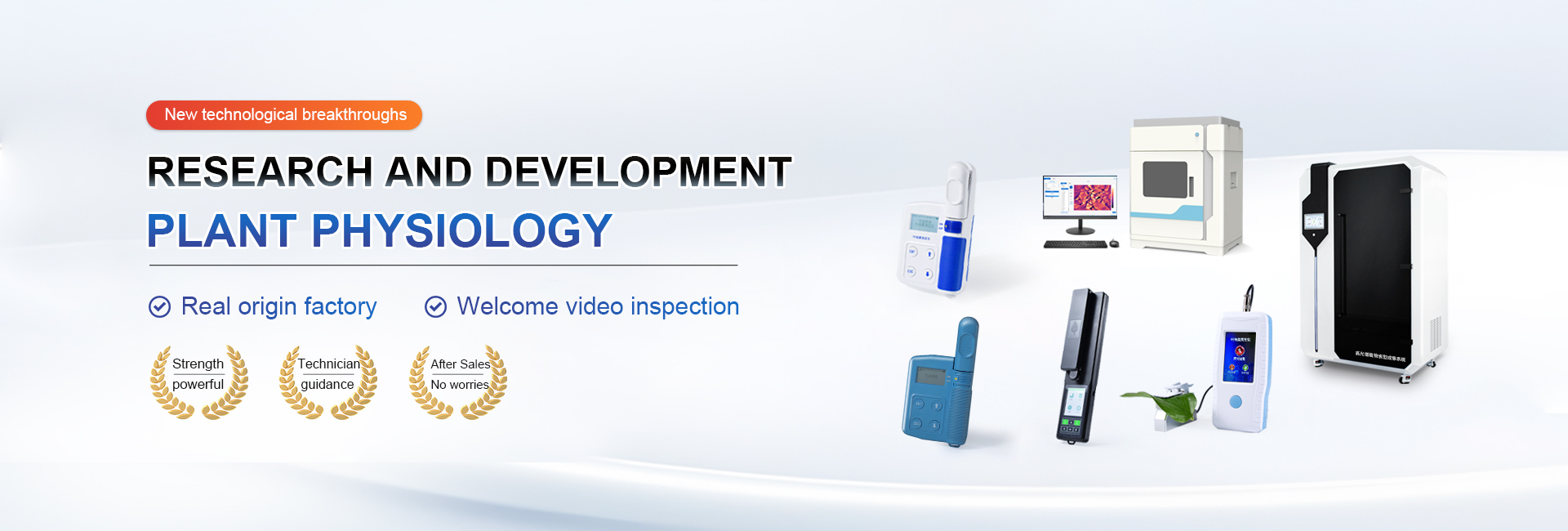
Traditional devices utilizing scanners or photoelectric tube arrays were often limited by narrow measurement ranges, making it difficult to capture large leaves in a single pass and resulting in data stitching errors. In contrast, modern leaf area meters have achieved a design evolution, transitioning from laboratory-oriented to field-ready capabilities. Agronomic experimental data indicates that maize leaves often exceed one meter in length during the tasseling stage; using traditional methods requires multiple measurements and stitching, leading to cumulative errors exceeding 5%. To address this challenge, the YMJ series of handheld devices from Laiyin Technology achieves an exceptionally wide dynamic measurement range—covering lengths from 0 to 2000 mm and widths from 0 to 155 mm—through optimized optical path structures and sensor layouts.
This capability directly resolves the pain points associated with measuring long-leaved crops in the field; precise "in-situ" readings can be obtained without the need to cut or segment the leaves. Such technological progress not only boosts efficiency but, more importantly, preserves the integrity of plant physiological processes, enabling continuous tracking of the same leaf across different growth stages. Furthermore, to cope with the variable conditions of field environments, this new generation of leaf area meters features enhanced environmental adaptability. The integrated design—combining the main unit and probe with a high-capacity built-in lithium battery—eliminates reliance on AC power, making it feasible to conduct intensive, continuous measurements in remote forests and agricultural fields. Image algorithms empower the precise analysis of complex samples. As research deepens, the demand for leaf parameters has expanded beyond simple area measurements. Morphological indicators—such as leaf perimeter, length-to-width ratio, shape factor, and lesion area—have become critical data points in plant pathology and stress physiology research. While traditional photoelectric devices rely on signal occlusion principles and struggle to capture detailed morphological features, image-based leaf area meters utilizing image recognition technology have filled this gap. In plant pathology research, traditional devices often misidentify insect holes or lesions as part of the leaf area, leading to data inaccuracies.
Research in *Plant Phenomics* indicates that calculating effective leaf area using image segmentation algorithms yields significantly higher precision than traditional photoelectric methods. Imaging-based devices, such as the YMJ-P and YMJ-P2 models, integrate high-resolution image acquisition systems with advanced image processing algorithms. By employing techniques such as edge detection, contour feature extraction, and conversion of visual data into physical measurements, these devices can rapidly analyze complex parameters including leaf area, perimeter, insect hole count, and insect hole area. For instance, the YMJ-P series achieves a measurement accuracy of 1% (for leaves exceeding 30 cm²) and features an automatic merging function for segmented measurements; this allows the device to use algorithms to stitch together images of large, broad leaves that exceed the standard measurement range, thereby ensuring data integrity and accuracy. This technological leap—shifting from simple numerical measurement to morphological analysis—significantly enriches the dimensions of research data and expands the scope of leaf area meter applications in precision research. IoT technology is reshaping the workflow of field data collection. In modern, data-driven agricultural research, the timeliness and traceability of data are paramount. Traditional field measurements often face challenges such as difficult recording, disorganized archiving, and poor geolocation capabilities. Researchers frequently have to record data manually on handheld devices and then transcribe it into Excel—a process that is not only inefficient and prone to human error but also lacks precise geographic data support. This lag in data flow has become a bottleneck hindering improvements in research efficiency. The integration of IoT technology has fundamentally restructured this process. High-end leaf area meters, such as the YMJ-G handheld model, now incorporate high-speed GPS positioning modules and 4G wireless transmission systems. At the moment of measurement, the device records leaf dimensions (length, width, and area) while simultaneously capturing latitude, longitude, and timestamp information, truly achieving "spatiotemporal integration" in data collection. Measurement data can be uploaded to a cloud platform in real-time, allowing researchers to view measurement times and leaf parameters remotely, as well as generate line graphs or bar charts for analysis. This "capture-and-transmit" model bridges the "last mile" between the field and the laboratory computer, effectively solving issues like data loss and the difficulty of linking geographic information during fieldwork, while providing a solid technical foundation for establishing large-scale, long-term plant growth databases.